
The
Journey
back
I sometimes think the world was larger when I was young.
Not physically, of course, but it felt that way.
Asia seemed further away then—more mysterious, less packaged, less connected. There were no phones in our pockets telling us where we were, no online reviews, no instant translations and no video calls back home. You went because you wanted to see what was there, and if you were lucky, you came back changed.
I remember those years with a warmth that has never really left me. The long train journeys, the heat, the smells, the strange food that quickly stopped feeling strange, and the sense of stepping into a world that moved according to a different rhythm. We travelled with very little: a bag, a book, some travellers cheques and a vague idea of where we might go next. There was something wonderful about not knowing. You could arrive in a town with no reservation and find somewhere to stay. You could sit for hours in a café or by the sea because there was nowhere else you needed to be. You could talk to people you had just met and somehow feel that the conversation mattered.
We were younger then, of course. We could sleep almost anywhere. We could tolerate the uncomfortable bus, the erratic timetable and the hotel room with a fan that barely worked. None of it seemed particularly important. What mattered was the experience. What mattered was that the world felt open.
Then life did what life does. Work became more serious. Families arrived. There were mortgages, schools, deadlines, responsibilities and the quiet accumulation of things that eventually begin to define our days. Travel remained important, but it changed. Trips became shorter. Bookings
became more organised. The backpack disappeared and the hotels improved. Gradually, without really noticing it, we started travelling through places rather than living in them, even for a brief time.
I do not regret any of that. We built lives. We raised families. We worked hard. We became, in many ways, more comfortable than we could have imagined when we were twenty-five. But I sometimes wonder whether part of the bargain was that we became too comfortable. The old curiosity never quite disappeared, nor did the memory of what it felt like to wake up somewhere unfamiliar and know that the day belonged entirely to you.
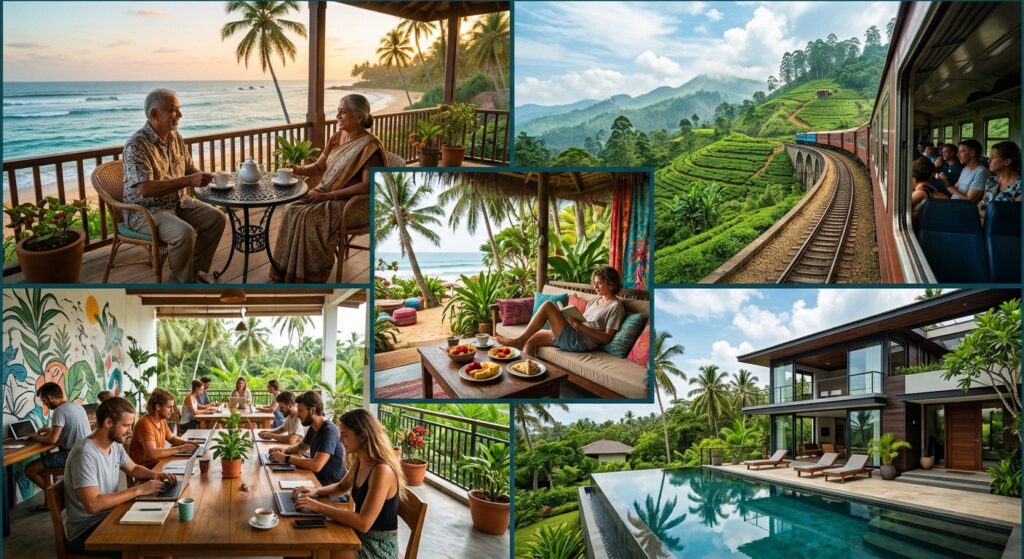
That is one of the reasons Sri Lanka appeals to me now. Not because I want to go back and pretend to be young again. I do not. I like a comfortable bed. I like good coffee. I like air-conditioning. I have reached the stage of life where I am perfectly happy to admit that. But the things I loved about Asia all those years ago are still here: the warmth, the colours, the sea, the mountains, the food, the sense of family and community, and the feeling that the day does not always have to be rushed.
The world has changed enormously since those first journeys and, in some ways, that makes returning easier. I can sit in Colombo and speak to family on the other side of the world as easily as if they were across town. I can read the newspapers from home. I can deal with work if I need to. I can manage banking, investments and the ordinary details of life from a laptop. The world that once felt impossibly large has become remarkably small.
Perhaps that is what makes this stage of life so interesting. For the first time, many of us have both the curiosity of the traveller we once were and the means to travel in a way that suits who we are now. I no
longer want to race through a country. I want to stay. I want to know where to buy fruit. I want to have a favourite café. I want to recognise the person at the local shop. I want to take a train into the hills because I have the time, not because it is on a list of things I must do before flying home. I want to go away for a few days and come back to somewhere that feels familiar.
Perhaps that is what I mean by a second life. Not another life replacing the first one, but another
layer to it. A place where I can spend a few months each year without giving up everything I have built elsewhere. Somewhere I can travel from, somewhere I can return to, and somewhere that slowly begins to feel like mine.
There is something familiar about the idea. When I was younger, families often had a holiday house.
Sometimes it was little more than a basic place near the beach. It was not about luxury; it was about escape. You packed the car, drove away from the city and stepped into another version of your life for a few days. The clothes were different. The pace was different. The expectations were different. You slept better. You talked more. You spent longer over breakfast.
Maybe this is simply the modern version of that. Except now the beach house might be an apartment in Colombo. The weekend away might be Galle, Kandy, the hill country or a safari. The drive down the coast might become a flight to India, Singapore or somewhere else in Asia. The scale has changed, but the feeling has not.
And perhaps there is another difference. When we were young, travel was often an escape from
responsibility. Now it can be a reward for having carried it for so long. We do not have to disappear
from our families. We do not have to
abandon our homes. We do not have to stop working if we still enjoy it. We do not have to make some grand declaration that we have emigrated or retired. We can simply spend part of the year somewhere else. We can work a little, travel slowly, return home when we want to, and come back again when we are ready.
There is great freedom in not having to choose. For much of life, we are told that things must be one way or another: work or retire, live here or live there, stay or leave. But perhaps, at this stage, we have earned the right to be less definite. Perhaps we can have both—the life we built and the life we once imagined, the security of home and the pleasure of discovery, the comfort we now appreciate and the curiosity we never quite lost.
I do not want to recreate my youth. I am not sure I could, even if I tried. But I would like to reconnect with some of what it taught me: that life can be simpler, that time matters, that people matter, that the world is full of places worth knowing slowly, and that sometimes changing where you wake up can change the way you see everything else.
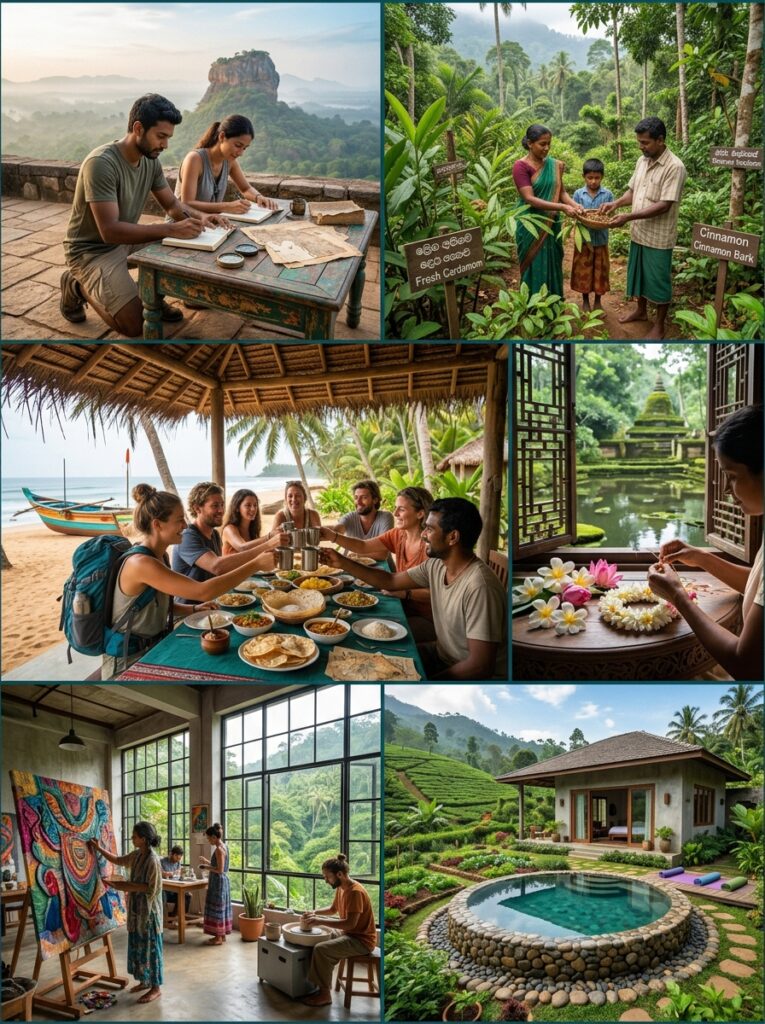
Perhaps the journey back is not really about returning to Asia. Perhaps it is about returning, just a little, to ourselves.
Make
Sri Lanka
Your Home Base
Travel more slowly. Stay longer. See more.
For many of us, travel changes as we get older.
We may still want to explore new countries, but we are less interested in racing through airports, changing hotels every few nights or trying to fit an entire region into a two-week itinerary.
That is where the idea of slow travel becomes so appealing.
Slow travel is about spending longer in a place, travelling with less urgency and allowing time to experience ordinary life as well as the major attractions. It means fewer destinations, longer stays and a greater sense of connection with the places we visit.
Sri Lanka can work particularly well as a base for this kind of lifestyle.
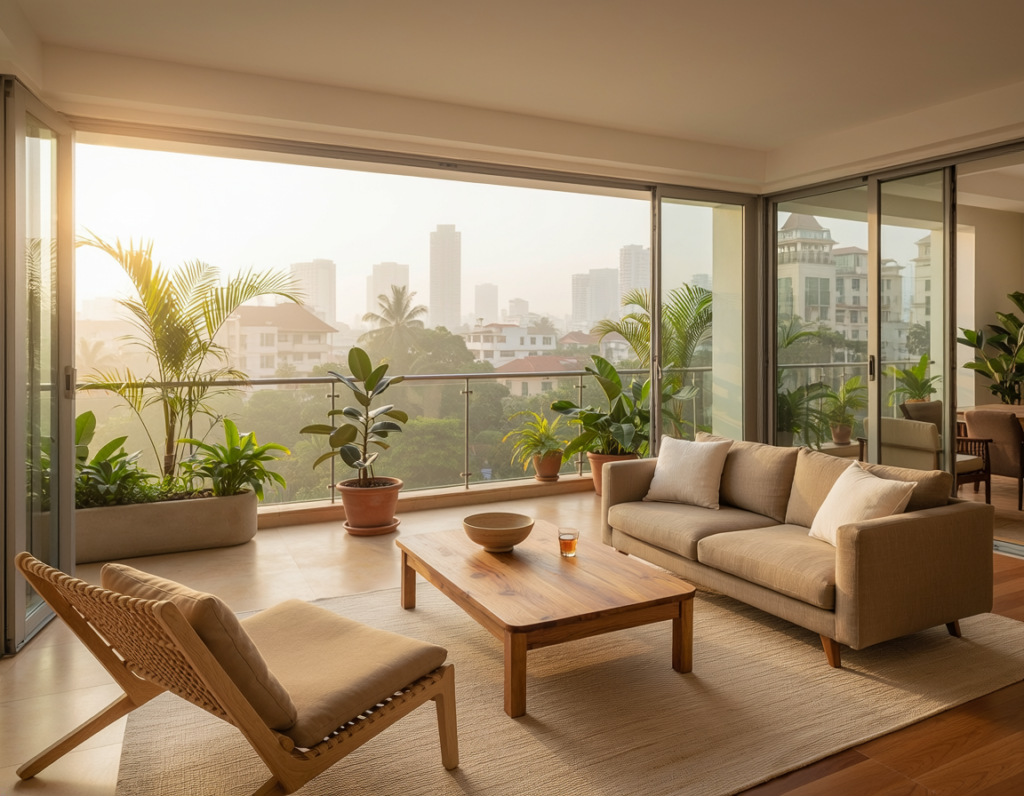
Imagine having a comfortable apartment in Colombo that feels like home. Your belongings are there. You know the building, the neighbourhood and the people around you. When you want to travel, you can leave for a week in India, ten days in Malaysia, a few days in Singapore or a longer journey
through Europe—and then return to somewhere familiar.
That changes the character of travel.
Instead of constantly packing and moving on, you can travel lightly, knowing that your main home base is waiting for you. There is no need to carry everything with you or treat every journey as a major expedition.
And slow travel does not have to mean international travel alone.
Sri Lanka itself is ideal for exploring gradually. You can spend a few days in Galle, return to Colombo, then later visit Kandy, the hill country or a national park. There is no pressure to “see Sri Lanka” in one trip because you know you will be back.
That is perhaps the real attraction of using Sri Lanka as a home base.
It gives you the freedom to travel widely without feeling permanently in transit.
You can enjoy the excitement of discovery, but also the comfort of returning to your own apartment, your own bed, your favourite café and the routine that makes another country begin to feel like home.
Slow travel is not about seeing less. It is about giving yourself more time to enjoy where you are—and somewhere familiar to return to when the journey is over.
H
ave a
Q
uestion
We’d love to hear from you. Whether you’re exploring property opportunities, considering a move to Sri Lanka, or simply looking for more information, we’re here to help.